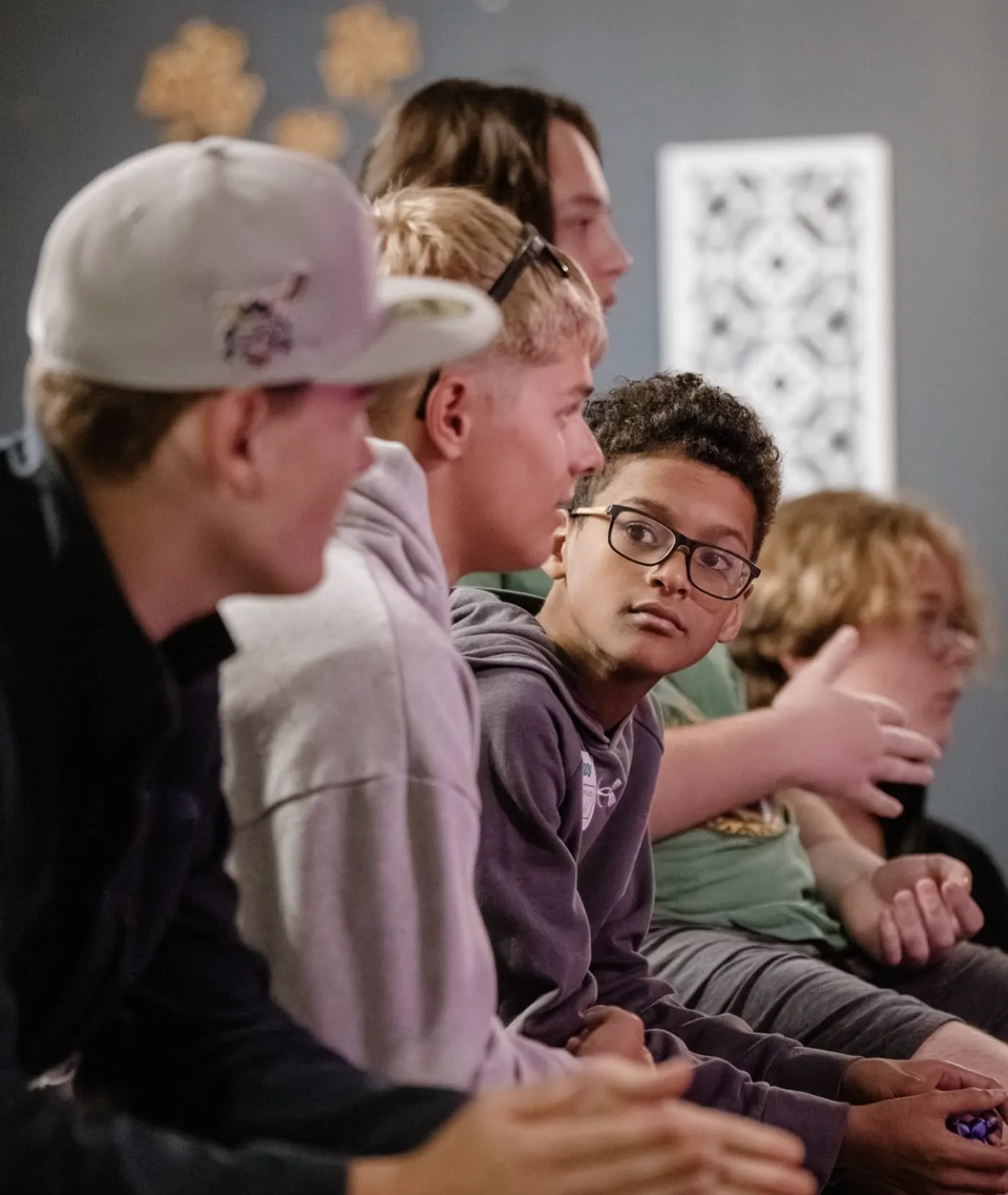
Somewhere around middle school, kids start caring a lot more about what other people think.
Something you’ve suggested a hundred times sounds brilliant the minute their coach says it. Advice they’ve ignored for months is suddenly interesting coming from a teacher. Faith can work the same way. What you’ve been teaching at home sometimes lands differently when they hear it from another adult they respect.
That doesn’t mean you matter less. Their world is just getting bigger. So this is a great season to make sure the other adults in it are pointing them toward Jesus too.
That’s a big part of why small groups matter so much in Nuvo YTH. We want every student to have leaders who know them and cheer them on as their faith becomes their own. And it works best when parents and leaders are working together.
Here are four ways to make that happen.
1. Help Your Kid Get to Know Their Leader
Think about the adults who made a difference for you growing up. It probably wasn’t one big conversation that mattered. They just kept showing up.
Our leaders want to know your kid: what they’re into, what makes them laugh, what’s been hard lately. That kind of relationship takes time, and it’s tough to build if your student is only there once a month.
Try this
- Make YTH a regular part of your week so your student sees the same leader and the same group of kids.
- Introduce yourself to their leader at drop-off and get the best way to reach them.
- If your kid is nervous about going, ask the leader to look out for them that first Sunday. A familiar face helps a lot.
2. Tell Their Leader What’s Going On
Your kid’s small group leader only sees a small slice of their life. They usually don’t know what’s happening at school or at home unless someone tells them.
That’s where you come in. If your student is having friend drama, is anxious about starting middle school, or just made the team, let their leader know. It doesn’t need to be a meeting. A quick text works fine:
“Hey, just a heads up that Sam’s been having a hard time with a couple of friends at school. No need to bring it up, but I thought it’d help for you to know.”
“Avery’s been asking a lot of questions about prayer lately. If it comes up in group, I’d love for you to encourage that.”
One caution: your student is starting to want more privacy, and that’s normal. You don’t have to pass along everything they tell you. Share what would actually help their leader support them, and if you’re not sure, ask your kid first.
3. Keep the Conversation Going at Home
You don’t need a plan or a discussion guide. The car ride home is usually enough.
Try this
- Ask, “What was the best part of YTH today?” or “Did anybody say something that made you think?”
- Don’t quiz them on the lesson. You’re not checking whether they paid attention. You’re giving them room to think out loud.
- If you get “nothing,” let it go. Kids often open up later, sometimes at bedtime or a few days after.
4. Be Okay With Another Adult Having a Voice
This one can be hard. We want to be the people our kids come to with everything, and hopefully we always will be.
But sometimes your kid will feel more comfortable asking their leader a question they’re embarrassed to ask you. Sometimes their leader will say something you’ve said a dozen times, and this time it’ll stick. That’s okay. It means your kid has one more person on their side.
We want parents to know we’re on the same team.
One Thing to Do This Month
Reach out to your student’s Nuvo YTH small group leader. Introduce yourself, tell them a little about your kid, and ask how you can back up what they’re learning.
You could also ask, “What’s one thing I can pray about for your group?” Leaders don’t hear that very often, and it means a lot.
Your kid doesn’t need you to have every answer or carry their whole spiritual life by yourself. They need you to keep showing up and to help put good people around them. We’d love to do that with you.